Why AI Startups Are Choosing Bare Metal Servers
Artificial intelligence startups are moving fast. From generative AI tools and computer vision platforms to automation engines, voice applications, recommendation systems, and AI-powered SaaS products, young companies are building products that need serious computing power from day one.
In the early stage, many startups begin with public cloud credits or virtual machines. That makes sense because it is quick, flexible, and easy to launch. But once the workload becomes heavier, the cost and performance challenges start becoming more visible. Training models, running GPU-based inference, processing large datasets, and serving thousands of real-time requests can become expensive and unpredictable on shared or virtualized infrastructure.
This is where AI startups using bare metal servers are getting a strong advantage. Bare metal servers give direct access to physical hardware without a virtualization layer between the workload and the machine. IBM describes bare metal servers as physical machines rented by a user that are not shared with other tenants, giving the user control over the server infrastructure.

Why AI Startups Need Stronger Infrastructure
AI products are different from normal websites or basic applications. A regular website may need CPU, RAM, storage, and bandwidth. But AI applications often need high-performance GPUs, fast storage, stable networking, and predictable compute availability.
An AI startup may need infrastructure for:
- Model training
- Fine-tuning large language models
- Real-time inference
- Image and video processing
- Natural language processing
- Data scraping and cleaning
- Vector databases
- Recommendation engines
- Internal development environments
- API-based AI products
These workloads are not light. Even a small delay in processing can affect user experience. If an AI chatbot takes too long to respond, users leave. If an image generation tool is slow, customers complain. If model training takes too many hours, development cycles become longer.
What Makes Bare Metal Servers Useful for AI?
Bare metal servers are dedicated physical servers. Unlike shared cloud instances, they are not divided among multiple customers through virtualization. This gives startups more direct control over CPU, GPU, memory, storage, operating system, drivers, security settings, and workload optimization.
For AI teams, that matters because machine learning workloads often depend on hardware-level performance. GPU drivers, CUDA versions, storage speed, and network configuration can all affect results. DigitalOcean notes that bare metal GPUs provide direct access to hardware resources without virtualization or abstraction layers, giving users more control over hardware configuration, CUDA drivers, and memory management.
1. Faster Model Training
One of the biggest reasons AI startups choose bare metal is performance. Model training is compute-heavy. Training a machine learning model requires the system to process huge amounts of data repeatedly. The faster the compute environment, the faster the team can test, improve, and deploy new versions.
On virtual machines, performance can sometimes vary because the underlying hardware may be shared or abstracted. With bare metal, startups get dedicated resources. This helps reduce performance inconsistency and gives better control over GPU usage.
For a startup, faster training is not just a technical benefit. It is a business advantage. If one team can test five model versions in a week while another team can test only two, the faster team can improve its product more quickly.
2. Better GPU Utilization
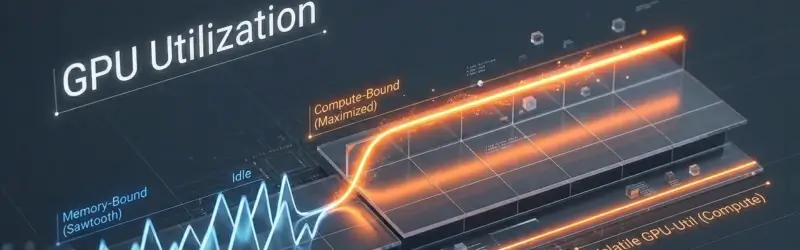
AI startups often spend heavily on GPU resources. GPUs are expensive, and wasting GPU power is painful. Bare metal servers can help teams use GPUs more efficiently because they get direct access to the hardware.
For example, a startup working on image recognition, video analytics, or large language model fine-tuning may need high GPU memory and stable performance. Bare metal gives the team more control over how GPUs are assigned, monitored, and optimized.
NVIDIA’s documentation around bare metal AI deployments highlights how GPU nodes can be managed in Kubernetes using the NVIDIA GPU Operator, allowing administrators to handle GPU nodes much like CPU nodes in a cluster.
3. Lower Long-Term Infrastructure Cost
Cloud platforms are convenient, but costs can grow quickly when workloads run continuously. For AI startups, this becomes a major concern after the early experimentation phase.
A startup may begin with cloud credits, but once the product gains users, the monthly bill can jump due to GPU hours, storage, bandwidth, API calls, and data transfer charges. Bare metal servers are often more predictable because the startup pays for dedicated server capacity rather than constantly scaling usage-based resources.
This does not mean bare metal is always cheaper from day one. For very small experiments, public cloud may still be easier. But when AI workloads become steady and predictable, dedicated servers for AI startups can offer better cost control.
4. More Control Over AI Stack
AI teams often need custom software environments. They may use Python, PyTorch, TensorFlow, CUDA, Docker, Kubernetes, vector databases, model-serving frameworks, monitoring tools, and custom security configurations.
On bare metal, developers can install and configure the stack as needed. They are not forced into platform limitations. This is especially useful for startups building advanced AI products where small infrastructure changes can improve speed, stability, or cost.
Common AI stack components on bare metal may include:
- Linux-based operating systems
- NVIDIA GPU drivers
- CUDA toolkit
- Docker containers
- Kubernetes clusters
- Model-serving tools
- Vector databases
- Object storage
- Monitoring and logging systems
- Backup systems

5. Improved Data Privacy and Security
AI startups often deal with sensitive data. This may include customer conversations, medical records, financial documents, business files, user behavior data, images, videos, or proprietary training datasets.
Bare metal servers offer dedicated single-tenant infrastructure. Since the server is not shared with other customers, startups get more isolation and control over how data is stored, processed, encrypted, and accessed.
This can be important for startups working in industries like healthcare, legal tech, fintech, cybersecurity, enterprise automation, and government-related solutions.
6. Better Performance for AI Inference
Training gets a lot of attention, but inference is where many AI startups spend daily compute resources. Inference happens when a trained model responds to real user input.
Examples include:
- A chatbot answering a customer question
- An AI tool generating an image
- A voice assistant converting speech to text
- A fraud detection model checking a transaction
- A recommendation engine suggesting products
Inference needs speed and reliability. If the response time is slow, the product feels weak. Bare metal servers can help reduce latency because the application runs on dedicated resources with fewer layers between the software and hardware.
7. Support for Hybrid AI Infrastructure
Many startups do not move fully to bare metal immediately. Instead, they use a hybrid model.
They may use public cloud for quick experiments, storage, and global services, while using bare metal servers for heavy GPU workloads, model training, and production inference. This gives them the best of both worlds: flexibility from cloud and performance from dedicated hardware.
This approach is practical because AI workloads are not all the same. Some tasks need instant scaling. Some need raw power. Some need low cost. Some need strict control.
8. Scaling AI Products with Predictability
Startups need to scale carefully. If they grow too slowly, users leave. If they scale too aggressively, costs explode. Bare metal helps teams plan capacity more clearly.
For example, if a startup knows that one server can handle a certain number of inference requests per second, it can calculate how many servers are needed as traffic grows. This makes planning easier compared to unpredictable billing models.
Industry demand for AI infrastructure is also rising sharply. Gartner projected worldwide AI spending to total $2.5 trillion in 2026, with AI-optimized servers expected to see a 49% spending increase. That means more companies are investing in infrastructure built specifically for AI workloads.
When Should an AI Startup Choose Bare Metal?
Bare metal servers may be a good fit when:
- GPU usage is high and continuous
- Cloud costs are becoming difficult to control
- The team needs custom drivers or software configuration
- Inference speed is critical
- Data privacy is important
- Workloads are predictable
- The product needs dedicated resources
- The team wants more control over infrastructure
Final Thoughts
AI startups are under pressure to build faster, serve users better, and control infrastructure costs. As AI products become more resource-heavy, many teams are looking beyond basic virtual machines and shared cloud environments.
Bare metal servers offer dedicated performance, better GPU control, stronger data isolation, predictable costs, and deeper customization. For startups working on model training, inference, automation, computer vision, natural language processing, or AI APIs, this can make a major difference.
The future of AI will not be shaped only by better models. It will also be shaped by better infrastructure. Startups that understand this early can build products that are faster, more reliable, and easier to scale.
For growing AI companies, bare metal is not just a server choice. It is a serious infrastructure strategy.