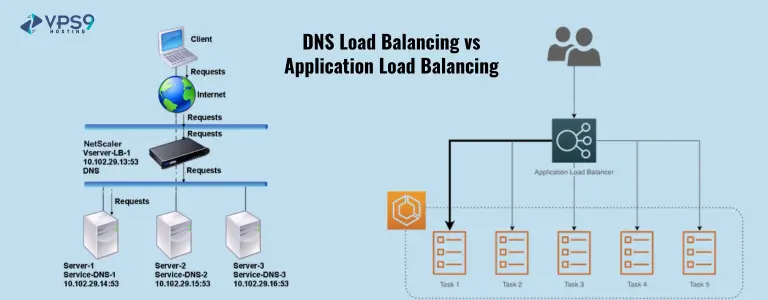
As businesses become increasingly dependent on websites and online applications, keeping those services available and responsive becomes important. A website that receives a large number of visitors needs to handle that traffic efficiently without putting too much pressure on a single server.
This is where load balancing comes into the picture. In simple terms, load balancing helps distribute website traffic across multiple servers instead of sending every visitor to the same server. This can improve reliability, help handle higher traffic volumes, and reduce the impact of individual server problems.
Two approaches businesses may come across are DNS load balancing and application load balancing. Although both are designed to distribute traffic, they work in different ways and are suited to different situations.
What Is Load Balancing?
Imagine a business with one customer service counter and hundreds of customers waiting to be served. As more customers arrive, the waiting time increases. Adding several counters allows customers to be distributed between them, making it easier to handle the overall demand.
Websites and applications can face a similar situation. When many people access a website at the same time, relying on a single server can create performance and availability challenges.
Load balancing helps distribute those visitors between multiple servers. If one server is busy, other servers can handle some of the incoming traffic. For businesses, this can help create a more reliable online service.

What Is DNS Load Balancing?
DNS load balancing uses the domain name system to distribute visitors between different servers or locations. DNS is responsible for helping browsers find the server associated with a domain name.
With DNS-based traffic distribution, a website can have several servers available instead of relying on only one. When visitors access the domain, they can be directed to different server addresses based on the way the DNS system has been configured.
For example, a business serving customers in different parts of the world could have servers in Asia, Europe, and North America. DNS-based routing can help direct visitors toward different locations.
This makes DNS load balancing particularly useful for businesses that want to distribute traffic geographically or maintain multiple hosting locations.
How Does DNS Load Balancing Work?
The process is easier to understand with a simple example. Suppose a company has three servers supporting the same website. Instead of having the domain point to only one server, the DNS configuration can include multiple destinations.
When visitors access the website, different users may be directed to different servers. This allows the overall traffic to be spread across the available infrastructure.
The exact method can vary. Businesses may distribute traffic evenly, direct visitors based on their location, or use other rules depending on their requirements.
However, DNS primarily determines where a visitor should connect. It does not manage every individual website request after the visitor reaches the server.
What Is Application Load Balancing?
Application load balancing works closer to the website or application itself. Instead of simply directing visitors to different server addresses, an application load balancer receives the incoming request and determines which available server should handle it.
Think of it as a traffic manager sitting between visitors and the servers running the application.
A visitor accesses the website, the request reaches the load balancer, and the load balancer forwards that request to an appropriate server. This allows businesses to have more control over how traffic is distributed.
Application load balancing can be particularly useful for larger websites, online stores, business applications, and other services where traffic management needs to be more flexible.
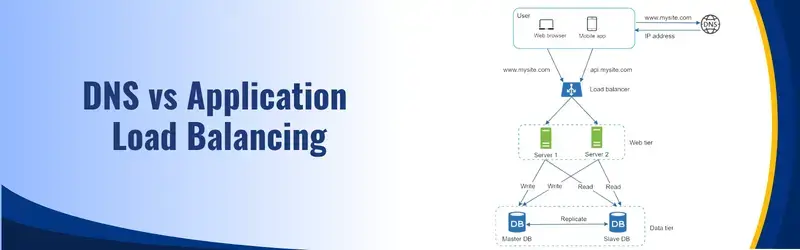
DNS vs Application Load Balancing
The simplest way to understand DNS vs application load balancing is to look at where the traffic decision takes place.
DNS load balancing helps decide which destination a visitor should connect to. Application load balancing sits between the visitor and the servers and decides which backend server should handle the request.
This means application load balancing can generally make more detailed decisions about incoming traffic, while DNS-based distribution is more focused on directing users between available destinations.
Neither approach is automatically suitable for every business. The right option depends on the website’s size, traffic patterns, number of locations, and availability requirements.
What Are the Benefits of DNS Load Balancing?
One of the main advantages of DNS load balancing is simplicity. Businesses can use DNS to distribute visitors between different servers or locations without necessarily placing an additional traffic management layer in front of every request.
It can also be useful for businesses with an international audience. A company with servers in multiple regions may be able to direct users toward different locations, helping create a more geographically distributed setup.
DNS-based traffic distribution can therefore be useful when the main goal is to direct visitors between different locations or hosting environments.
What Are the Benefits of Application Load Balancing?
Application load balancing provides greater control over how traffic reaches individual servers. Instead of simply directing users to different IP addresses, it can manage incoming application requests and distribute them between available servers.
This can be helpful when a website has several servers working together. If one server becomes unavailable, the load balancer can potentially direct new requests toward other available servers.
For businesses operating important websites or applications, this additional layer of traffic management can help improve reliability and make it easier to manage growing demand.
Why Does Failover Matter?
Imagine an online store that relies on three servers. If one server suddenly stops working, the business does not want every visitor to be affected.
A properly designed traffic management system can detect unavailable servers and direct new visitors or requests toward healthy servers.
This is known as failover.
The way failover works depends on the infrastructure. DNS-based systems can support failover, but DNS caching can sometimes delay changes. Application load balancing can generally make traffic decisions more directly because requests continue to pass through the load balancer.
The Role of DNS Caching
DNS caching is one of the main considerations when using DNS-based traffic distribution.
When a domain is looked up, the result can be temporarily stored by browsers, devices, and internet service providers. This helps make the internet faster by avoiding repeated DNS lookups.
However, caching also means that a DNS change may not reach every user immediately. If a business needs to quickly redirect traffic away from an unavailable server, this delay can be important.
This is one reason businesses should consider their availability requirements before deciding how to distribute traffic.
Can Businesses Use Both?
Yes. DNS load balancing and application load balancing do not necessarily have to compete with each other.
Larger businesses can use DNS to direct visitors toward the appropriate region or location and then use an application load balancer within that location to distribute traffic between individual servers.
For example, a business could have users directed toward a European hosting location, where an application load balancer then distributes their requests across several servers.
This approach can provide both geographic traffic distribution and more detailed application-level management.

Which Approach Is Right for Your Business?
The right approach depends on what the business is trying to achieve.
DNS load balancing can be useful when the main requirement is distributing visitors between different locations or hosting environments. It can be particularly relevant for businesses with audiences spread across multiple geographic regions.
Application load balancing can be more appropriate when a business needs greater control over how requests are handled across multiple servers. It can be useful for websites and applications where availability and traffic management are important.
For larger infrastructures, combining both approaches may provide the flexibility needed to manage traffic at different levels.
Final Thoughts
DNS load balancing and application load balancing both help businesses distribute website traffic, but they solve the problem in different ways.
DNS load balancing focuses on directing visitors toward different destinations, while application load balancing provides more control over how individual requests are handled once they reach the application infrastructure.
For smaller websites, a simple approach may be sufficient. As a business grows, however, multiple servers, geographic locations, and higher traffic volumes may require a more structured approach to traffic management.
Understanding the difference between these two methods allows businesses to choose an infrastructure strategy based on their actual requirements rather than simply choosing the most complicated option.