Forex trading has evolved significantly over the last decade. Today, traders rely on advanced trading platforms, automated strategies, Expert Advisors (EAs), and algorithmic trading systems to execute trades within milliseconds. In such an environment, having a stable internet connection and a powerful computer is often not enough.
This is where a Forex VPS becomes an essential tool.
Whether you’re running automated trading bots, managing multiple trading accounts, or simply looking to reduce latency between your trading platform and broker servers, choosing the Best VPS for Forex Trading can significantly improve your trading experience.
In this guide, we’ll explain what a Forex VPS is, why traders use it, what features matter most, and how to choose the right Forex Trading VPS for your trading strategy.
What Is a Forex VPS?
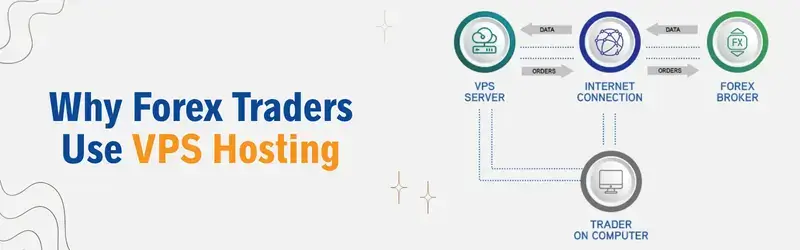
A Forex VPS (Virtual Private Server) is a remote server that runs continuously in a professional data center. Instead of keeping your trading platform running on your home computer, you install MT4, MT5, Expert Advisors, and trading software on the VPS.
The server operates 24 hours a day, even when:
- Your computer is turned off
- Your internet connection fails
- There is a power outage
- You are traveling
- Your local system crashes
This uninterrupted operation is one of the main reasons professional traders rely on VPS Hosting for Forex.
Why Forex Traders Use VPS Hosting
The Forex market operates 24 hours a day, five days a week. Trading opportunities can appear at any time, including while you are sleeping.
Many traders use VPS solutions because they provide:
Continuous Trading
A VPS allows trading platforms to remain online around the clock.
This is especially important for:
- Scalping strategies
- Automated trading systems
- Copy trading services
- Expert Advisors
- High-frequency trading approaches
Without a VPS, even a brief internet interruption can cause missed opportunities.
Lower Latency
Latency refers to the time it takes for data to travel between your trading platform and your broker’s server.
In Forex trading, even milliseconds matter.
A Low Latency Forex VPS located near your broker’s servers can reduce execution delays and improve order processing speed.
This becomes particularly important for:
- Scalpers
- News traders
- Algorithmic traders
- High-volume traders
Improved Stability
Home internet connections are not designed for mission-critical financial applications.
Common issues include:
- Router failures
- ISP outages
- Power interruptions
- Computer crashes
- Operating system updates
A professionally hosted Forex Trading VPS provides significantly greater reliability.
How a Forex VPS Improves Trading Performance
Many traders underestimate how much infrastructure can impact trading results.
Consider the following example:
A trader runs an Expert Advisor from a home computer with:
- Average latency: 120ms
- Occasional internet interruptions
- Random system restarts
Another trader uses a Forex VPS Hosting solution located near the broker’s infrastructure with:
- Latency below 10ms
- 24/7 uptime
- Stable network connectivity
Over hundreds or thousands of trades, faster and more reliable execution can create a measurable difference.
While a VPS cannot guarantee profits, it can help eliminate technical disadvantages.
Key Features of the Best VPS for Forex Trading

Not all VPS solutions are suitable for trading.
When selecting the Best VPS for Forex Trading, focus on these critical factors.
Low Latency Connectivity
Low latency remains one of the most important considerations.
A VPS located close to your broker’s trading servers can:
- Reduce execution delays
- Improve order fill speed
- Minimize slippage
- Enhance trading performance
Many professional traders prioritize location before pricing.
High Uptime
Forex trading never stops during market hours.
Look for VPS providers that offer:
- 99.9% uptime or higher
- Redundant power systems
- Backup networking
- Enterprise-grade infrastructure
Downtime can result in missed trades and unmanaged positions.
Fast CPU Performance
Trading platforms themselves do not require massive processing power.
However, traders running:
- Multiple MT4 terminals
- Multiple MT5 terminals
- Several Expert Advisors
- Trading robots
- Signal services
may require stronger CPU resources.
Modern processors help maintain smooth operation during volatile market conditions.
SSD or NVMe Storage
Storage performance affects:
- Platform startup speed
- Historical data loading
- Strategy testing
- Trade execution logging
NVMe SSD storage generally provides the best performance.
Sufficient RAM
The amount of memory required depends on the number of trading terminals being used.
Typical recommendations:
| Usage | Recommended RAM |
|---|---|
| Single MT4/MT5 | 2 GB |
| Multiple EAs | 4 GB |
| Several Accounts | 8 GB |
| Heavy Automation | 8 GB+ |
Adequate memory helps prevent platform crashes and slowdowns.
MT4 VPS Hosting vs MT5 VPS Hosting
Most Forex traders use either MetaTrader 4 or MetaTrader 5.
MT4 VPS Hosting
MetaTrader 4 remains popular because of:
- Large EA marketplace
- Extensive broker support
- Simplicity
- Low resource consumption
Many traders continue to use MT4 for automated strategies.
MT5 VPS Hosting
MetaTrader 5 offers:
- More advanced charting
- Additional timeframes
- Improved backtesting
- Better multi-threading support
MT5 generally requires slightly more resources but provides greater flexibility for advanced traders.
Why Expert Advisors Need a VPS
Expert Advisors operate continuously and monitor market conditions around the clock.
A VPS ensures:
- Continuous operation
- Faster execution
- Stable connectivity
- Reduced downtime risk
For traders using automated systems, a Forex Robot VPS is often considered essential rather than optional.
Even a few minutes of downtime can cause an EA to miss trading opportunities.
Best VPS Locations for Forex Trading
Server location directly affects latency.
Popular Forex VPS locations include:
London
Ideal for brokers hosting infrastructure in:
- London Equinix centers
- European financial hubs
Popular among traders using European brokers.
New York
Suitable for brokers operating within:
- North American markets
- Financial institutions based in the United States
Provides strong connectivity for U.S.-based trading infrastructure.
Frankfurt
A major European internet hub.
Benefits include:
- Excellent connectivity
- Strong financial network presence
- Reliable infrastructure
Singapore
Popular among:
- Asian traders
- International Forex brokers
- Global trading networks
Provides excellent access to Asia-Pacific markets.
Forex VPS for Scalping
Scalping strategies rely heavily on speed. Scalpers typically aim to capture small price movements across numerous trades.
Success often depends on:
- Fast order execution
- Minimal latency
- Reduced slippage
A dedicated Low Latency Forex VPS can help improve execution consistency.
While infrastructure alone cannot create profits, it can remove avoidable delays.
Forex VPS for Copy Trading
Copy trading platforms automatically mirror trades from signal providers.
These systems require:
- Continuous connectivity
- Fast synchronization
- Stable operation
A VPS ensures copied trades are executed promptly without relying on a home computer.
This helps maintain alignment with the signal provider’s activity.
Security Benefits of Forex VPS Hosting
Security is another reason traders choose VPS environments.
Professional VPS infrastructure typically includes:
- Network firewalls
- DDoS protection
- Physical security controls
- Secure data centers
- Regular monitoring
Additionally, traders can implement:
- Strong passwords
- Two-factor authentication
- Access restrictions
- Secure backups
Protecting trading accounts should always remain a priority.
Common Mistakes When Choosing a Forex VPS
Choosing the Cheapest Option
Price should never be the only factor. A low-cost VPS with poor network performance may negatively affect trading execution.
Ignoring Location
Many traders focus on specifications but overlook server location. Latency often has a greater impact than additional CPU power.
Underestimating Resource Requirements
Running multiple platforms and Expert Advisors requires adequate RAM and CPU resources. Insufficient resources can cause platform instability.
Not Testing Latency
Before committing to a VPS, test latency between the VPS location and your broker’s servers whenever possible.
This provides a clearer picture of expected performance.
How to Choose the Right Forex VPS
Before purchasing a VPS, ask yourself:
- Which broker do I use?
- Where are the broker’s servers located?
- How many MT4 or MT5 terminals will I run?
- Will I use Expert Advisors?
- Do I need 24/7 automated trading?
- What is my monthly budget?
The answers will help determine the ideal configuration.
For most retail traders, a balanced VPS with:
- Low latency
- 4GB RAM
- SSD storage
- Reliable uptime
provides an excellent starting point.
Advanced traders may require additional resources depending on their workload.
Is a Forex VPS Worth It?
For casual traders who place occasional manual trades, a VPS may not be essential.
However, for traders who rely on:
- Expert Advisors
- Automated strategies
- Copy trading
- Scalping systems
- Multi-account management
A Forex VPS can become a valuable part of their trading setup. The primary goal is not to increase profits directly but to reduce technical risks that could negatively impact trading performance.
Reliable infrastructure allows traders to focus on strategy rather than worrying about internet outages, computer crashes, or missed opportunities.
Final Thoughts
Choosing the Best VPS for Forex Trading is about more than simply selecting a server with the highest specifications. Successful traders prioritize low latency, uptime, reliability, security, and proximity to their broker’s infrastructure.
A well-configured Forex Trading VPS can provide uninterrupted operation, faster execution speeds, and greater peace of mind. Whether you are running MT4, MT5, automated trading robots, or managing multiple trading accounts, the right VPS environment can help create a more stable and professional trading setup.
As Forex markets continue to become more competitive, having dependable infrastructure is no longer a luxury—it has become an important component of modern trading success.