Introduction
Launching a Software-as-a-Service (SaaS) application is an exciting milestone, but keeping infrastructure costs under control is often one of the biggest challenges. Many startups assume they need expensive cloud platforms, enterprise-grade servers, or large DevOps teams from day one. In reality, most successful SaaS businesses begin with lean infrastructure that grows alongside their customer base.
The secret isn’t spending more—it’s spending smarter.
Whether you’re building a CRM, project management platform, HR software, ERP solution, eCommerce application, or AI-powered platform, choosing the right hosting strategy can significantly reduce your operational expenses while maintaining excellent performance.
In this guide, you’ll learn practical ways to host a SaaS product efficiently, reduce infrastructure costs, improve scalability, and build a reliable foundation for future growth.
Start with What You Actually Need
One of the most common mistakes founders make is overestimating their infrastructure requirements.
A SaaS application with 100 active users doesn’t require the same environment as one serving 100,000 users. Purchasing oversized cloud instances or dedicated enterprise servers too early leads to unnecessary monthly expenses.
Instead, evaluate:
- Expected monthly users
- Average daily traffic
- Storage requirements
- Database size
- Background processing workloads
- API request volume
Once you understand these metrics, selecting the right SaaS hosting environment becomes much easier.
The goal should always be matching infrastructure with actual demand—not hypothetical future growth.
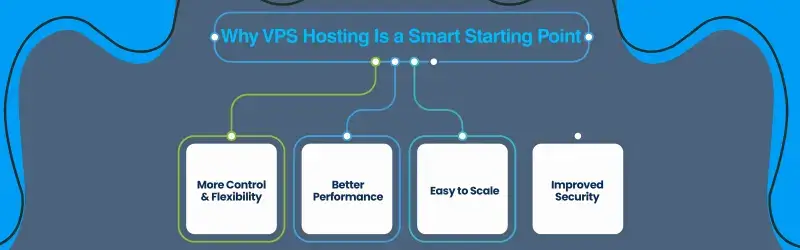
Why VPS Hosting Is a Smart Starting Point
For many startups, VPS Hosting for SaaS offers the perfect balance between affordability, flexibility, and performance. Unlike shared hosting, a VPS provides dedicated CPU, RAM, and storage resources without the high cost of dedicated servers.
Benefits include:
- Predictable monthly pricing
- Root-level access
- Better application isolation
- Improved performance
- Flexible software installation
- Easy scalability
Modern VPS environments allow developers to install Docker, Kubernetes, Node.js, Laravel, Python, PostgreSQL, MySQL, Redis, MongoDB, and numerous other technologies without restrictions.
This flexibility makes VPS servers ideal for growing SaaS applications.
Don’t Pay for Idle Resources
Many cloud providers charge based on allocated resources, even when your application isn’t actively using them.
If your SaaS experiences predictable traffic patterns. For example, heavy daytime usage but low overnight activity—you should avoid paying for permanently oversized servers.
Instead:
- Monitor CPU usage
- Track RAM utilization
- Review storage growth
- Analyze bandwidth consumption
Upgrade only when resource usage consistently approaches capacity.
Scaling based on real usage helps keep your affordable SaaS infrastructure efficient without compromising performance.
Optimize Your Application Before Upgrading Servers
Throwing larger servers at performance problems is rarely the most economical solution. In many cases, application optimization produces far greater improvements.
Areas worth optimizing include:
Database Queries
Slow database queries consume CPU and memory unnecessarily.
Consider:
- Adding indexes
- Optimizing joins
- Removing redundant queries
- Using query caching
Image Optimization
Large images increase storage costs and bandwidth usage. Compress images before uploading and use modern formats such as WebP wherever possible.
Enable Caching
Caching reduces repeated database requests.
Popular caching methods include:
- Redis
- Memcached
- Application caching
- Browser caching
A properly configured cache can dramatically improve application responsiveness while reducing server load.
Containerize Your SaaS Application
Container technologies like Docker make deployments faster, cleaner, and more consistent.
Instead of manually configuring servers every time, containerization allows your application to run identically across development, staging, and production environments.
Benefits include:
- Easier deployments
- Better portability
- Faster recovery
- Improved scalability
- Simplified updates
As your SaaS grows, containerized applications become much easier to manage than manually configured servers.
Separate Critical Services
Not every component of your SaaS needs to run on the same server forever.
As traffic increases, separating workloads improves both performance and reliability.
For example:
- Web application
- Database
- Redis cache
- File storage
- Queue workers
- Email services
Initially, these can run together on a VPS.
As demand grows, each service can move to its own environment without requiring a complete infrastructure redesign.
Use Object Storage for Files
Many SaaS platforms allow users to upload:
- Documents
- Images
- PDFs
- Videos
- Reports
- Backups
Keeping these files on your application server increases storage costs.
Instead, use object storage solutions designed specifically for scalable file management.
Benefits include:
- Lower storage costs
- Better redundancy
- Easier backups
- Faster scalability
- Reduced server load
Your VPS can then focus solely on running the application.
Automate Backups
Infrastructure failures happen.
Accidental deletions happen.
Human mistakes happen.
Regular automated backups are significantly cheaper than recovering lost customer data.
An effective backup strategy includes:
- Daily database backups
- Weekly full server snapshots
- File storage backups
- Backup verification
- Off-site backup storage
Automated backups improve reliability while keeping recovery costs low.
Monitor Everything
Many startups only notice infrastructure problems after customers complain.
Instead, monitor key performance indicators continuously.
Track:
- CPU usage
- Memory utilization
- Disk space
- Database performance
- Network traffic
- Server uptime
- Response times
Monitoring tools help identify bottlenecks before they become serious problems.
Fixing issues early is almost always less expensive than handling outages.
Secure Your Infrastructure from Day One
Security breaches are often far more expensive than infrastructure upgrades.
Basic security measures should never be overlooked.
Recommended practices include:
- Firewall configuration
- SSL certificates
- Multi-factor authentication
- Automatic operating system updates
- Strong SSH authentication
- Limited user permissions
- Regular vulnerability scans
Building security into your infrastructure early prevents costly incidents later.
Use Managed Services Selectively
Not every component requires full management.
Some services are worth outsourcing because they reduce operational complexity.
Examples include:
- Managed email delivery
- CDN services
- DNS management
- Monitoring platforms
- Backup services
Choosing managed services strategically lets your team focus on developing the product rather than maintaining supporting infrastructure.
Plan for Scalability Instead of Immediate Expansion
Scalability doesn’t necessarily mean having dozens of servers.
It means designing an architecture that can grow when required.
Good SaaS architecture should allow:
- Vertical scaling
- Horizontal scaling
- Load balancing
- Database replication
- Background workers
- Microservices (when necessary)
Many successful SaaS companies operate comfortably on modest infrastructure during their early growth stages because they designed their systems to scale later.
Keep Infrastructure Costs Predictable
Unexpected cloud bills can quickly disrupt startup budgets.
To maintain predictable spending:
- Monitor monthly resource usage
- Remove unused servers
- Delete abandoned snapshots
- Review storage regularly
- Optimize bandwidth consumption
- Audit subscriptions
Routine infrastructure reviews often uncover unnecessary expenses that accumulate over time.

Choose Hosting That Matches Your Growth
Different SaaS products have different infrastructure needs.
For example:
| SaaS Type | Recommended Starting Infrastructure |
|---|---|
| CRM | 2–4 vCPU VPS with 8–16 GB RAM |
| HR Software | VPS with SSD storage and automated backups |
| Project Management | VPS + Redis Cache |
| ERP | Higher-memory VPS with dedicated database |
| AI SaaS | GPU-enabled cloud instances when required |
| eCommerce SaaS | VPS with CDN and object storage |
The right choice depends on your application’s workload rather than industry trends.
Avoid paying for enterprise infrastructure before your business actually needs it.
Build Lean, Scale Smart
Successful SaaS businesses rarely begin with massive infrastructure investments.
Instead, they focus on:
- Building stable applications
- Optimizing performance
- Monitoring usage
- Scaling gradually
- Automating deployments
- Keeping operational costs under control
A carefully planned SaaS hosting strategy allows founders to invest more in product development, customer acquisition, and innovation rather than unnecessary infrastructure expenses.
Whether you’re launching your first SaaS application or optimizing an existing platform, a scalable VPS-based approach often provides the ideal combination of affordability, flexibility, and long-term growth potential.
Conclusion
Learning how to host a SaaS product efficiently isn’t about choosing the most expensive infrastructure—it’s about making informed decisions that align with your current business stage. By starting with VPS Hosting for SaaS, optimizing your application, automating operations, and scaling only when necessary, you can significantly reduce operational costs while maintaining a fast, secure, and reliable user experience.
As your customer base grows, your infrastructure can evolve alongside it, ensuring that every upgrade is driven by real demand rather than assumptions. A thoughtful approach to affordable SaaS infrastructure not only improves profitability but also creates a solid technical foundation for sustainable long-term success.