Technology has changed the way websites, apps, and online platforms are built. Earlier, businesses mainly depended on physical servers or basic shared hosting to run their websites. Today, modern businesses have more flexible options like Cloud Hosting and Serverless Computing. Both are powerful, scalable, and widely used, but they work in very different ways.
Many people assume that serverless means there are no servers involved. That is not true. Servers are still used, but the business or developer does not need to manage them directly. On the other hand, cloud hosting gives users access to cloud-based server resources where they have more control over the environment.
Understanding Serverless Computing vs Cloud Hosting is important before choosing a solution for your website, application, or online business. The right choice depends on your technical needs, budget, performance expectations, traffic pattern, and level of control required.
What is Cloud Hosting?
Cloud Hosting is a hosting solution where your website or application runs on cloud infrastructure instead of depending on one physical server. Resources such as CPU, RAM, storage, and bandwidth are distributed across multiple connected servers. This improves reliability, performance, and scalability.
In traditional hosting, if one server goes down, your website may face downtime. In cloud hosting, resources can be shifted or balanced across multiple servers, reducing the risk of service interruption. This makes cloud hosting suitable for websites, business applications, eCommerce stores, SaaS platforms, blogs, and growing digital projects.
Cloud hosting usually gives users more control over the server environment. You can install software, manage applications, configure security settings, scale resources, and customize the hosting setup based on your project requirements.
What is Serverless Computing?
Serverless Computing is a cloud-based execution model where developers can run code without managing servers. The cloud provider takes care of server provisioning, maintenance, scaling, and infrastructure management. Developers only need to focus on writing and deploying code.
In serverless architecture, applications are usually broken into functions. These functions run only when triggered by an event. For example, a function may run when a user uploads an image, submits a form, makes a payment, or requests data from an application.
Serverless computing is commonly used for APIs, automation tasks, backend services, microservices, data processing, and event-based applications. It follows a pay-as-you-go model, where you are usually charged based on execution time, number of requests, and resources consumed.
Serverless Computing vs Cloud Hosting: Core Difference
The biggest difference between Serverless Computing vs Cloud Hosting is control and management.
With cloud hosting, you get server resources and manage the environment based on your needs. You may need to handle updates, security settings, server configuration, application deployment, and resource scaling depending on the hosting type.
With serverless computing, you do not manage the server directly. The cloud provider automatically handles the backend infrastructure. You only deploy functions or code, and the system runs them when required.
In simple words:
Cloud Hosting gives you a server environment to manage.
Serverless Computing gives you a platform to run code without managing servers.
Both are useful, but they are designed for different types of workloads.
How Cloud Hosting Works
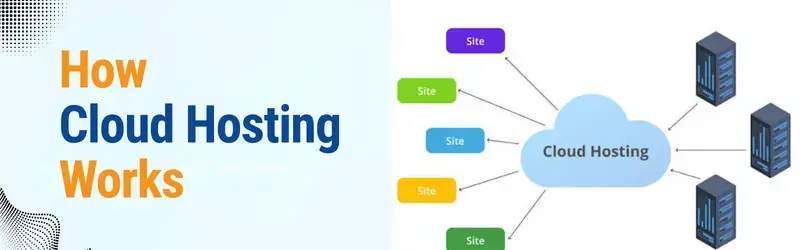
Cloud hosting works by using a network of cloud servers. Your website or application uses resources from this cloud network. Depending on the provider and plan, you may get dedicated resources, flexible scaling, storage options, backups, control panel access, and security features.
For example, if your website traffic increases during a sale or campaign, cloud hosting can allow you to upgrade resources like CPU and RAM. This helps maintain website speed and stability during high-traffic periods.
Cloud hosting is commonly used for:
- Business websites
- WordPress websites
- eCommerce stores
- Web portals
- CRM and ERP systems
- SaaS platforms
- Custom web applications
- High-traffic blogs
It is a practical choice when you need performance, flexibility, and control over your hosting environment.
How Serverless Computing Works
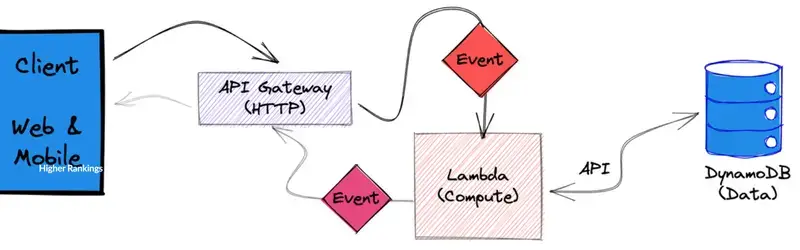
Serverless computing works on an event-based model. Instead of running a server continuously, your code runs only when a specific event triggers it.
For example, imagine you have an image upload feature. When a user uploads an image, a serverless function can automatically resize the image, compress it, and store it in cloud storage. Once the task is completed, the function stops running.
This model helps reduce unnecessary resource usage because you are not paying for idle server time. However, serverless computing may not be suitable for every application, especially if your project requires long-running processes, full server control, custom software installation, or predictable always-on performance.
Benefits of Cloud Hosting
One of the biggest advantages of Cloud Hosting is flexibility. You can host different types of websites and applications with more control over the setup. It is suitable for beginners, developers, businesses, and agencies.
Cloud hosting allows better customization compared to serverless. You can choose your operating system, install required tools, configure server security, manage databases, and optimize the environment for your workload.
Another benefit is predictable performance. If your application needs continuous availability, fixed resources, and stable server behavior, cloud hosting can be a strong choice. It is especially useful for websites that need to remain live 24/7.
Cloud hosting also supports traditional web hosting workflows. For example, WordPress, PHP websites, Laravel applications, Node.js apps, databases, control panels, email services, and file storage can be managed more easily in a cloud hosting environment.
Benefits of Serverless Computing
The main advantage of Serverless Computing is that developers do not need to worry about server management. This saves time and reduces infrastructure complexity.
Serverless platforms automatically scale based on demand. If your function receives a few requests or thousands of requests, the platform can adjust execution automatically. This makes it useful for applications with unpredictable traffic.
Another benefit is cost efficiency for event-based workloads. Since you pay only when the code runs, serverless can be affordable for lightweight tasks, APIs, background jobs, and automation workflows.
Serverless computing also helps developers build faster. They can focus on application logic instead of server setup, patching, monitoring, and maintenance.
Limitations of Cloud Hosting
Although cloud hosting is powerful, it may require technical knowledge. If you are using unmanaged cloud hosting, you need to handle server updates, firewall rules, security patches, backups, and performance optimization.
Cloud hosting may also involve fixed monthly costs. Even if your website has low traffic, you may still pay for the allocated server resources.
Scaling can be flexible, but it may not always be automatic unless the hosting setup supports auto-scaling. Some businesses may need technical support or server management services to get the best results from cloud hosting.
Limitations of Serverless Computing
Serverless computing also has limitations. One common issue is vendor dependency. Since your application functions are built around a specific cloud provider’s platform, moving to another provider later can be challenging.
Another limitation is cold start delay. If a serverless function has not been used for some time, it may take slightly longer to start when triggered again. This can affect applications where instant response time is important.
Serverless is also not ideal for applications that need full server access, custom system-level configuration, long-running tasks, or consistent background processes. Debugging and monitoring serverless applications can also be more complex compared to traditional cloud server hosting.
Cloud Hosting vs Serverless: Cost Comparison
Cost is one of the most important factors when comparing Cloud Hosting vs Serverless.
Cloud hosting usually follows a fixed pricing model based on resources like CPU, RAM, storage, and bandwidth. This makes budgeting easier because you know your monthly cost. It is suitable for websites and applications with regular traffic.
Serverless computing follows a usage-based pricing model. You pay based on function execution, request count, and resource consumption. This can be cost-effective for applications with irregular traffic or event-based tasks. However, if your application receives very high and continuous traffic, serverless costs can increase quickly.
So, cloud hosting is better for predictable workloads, while serverless is better for event-driven and variable workloads.
Performance and Scalability
Both cloud hosting and serverless computing are scalable, but they scale differently.
Cloud hosting scales by increasing server resources or adding more cloud instances. This gives better control over performance tuning, caching, database optimization, and server-level configuration.
Serverless computing scales automatically at the function level. It can handle sudden traffic spikes without manual server management. However, performance depends on the serverless provider, function design, execution limits, and cold start behavior.
For websites and applications that need stable, always-on performance, cloud hosting is often easier to manage. For tasks that run only when needed, serverless computing can be highly efficient.
Security Considerations
Security works differently in both models.
In cloud hosting, users are often responsible for server-level security. This includes firewall setup, software updates, malware protection, access control, SSL installation, and backup planning. Managed cloud hosting can reduce this responsibility.
In serverless computing, the cloud provider manages much of the infrastructure security. However, developers are still responsible for application security, access permissions, API protection, data validation, and secure function logic.
Neither option is automatically secure by default. Proper configuration, monitoring, and best practices are important in both cases.
When Should You Choose Cloud Hosting?
Choose Cloud Hosting if you need more control, predictable pricing, and a stable environment for your website or application.
Cloud hosting is a good choice for:
- Business websites
- WordPress websites
- eCommerce stores
- SaaS applications
- CRM or ERP software
- Custom web applications
- Projects needing database control
- Websites with consistent traffic
- Applications requiring server-level customization
If your project needs full control over hosting resources, cloud hosting is usually the better option.
When Should You Choose Serverless Computing?
Choose Serverless Computing if your application is event-driven and you do not want to manage servers.
Serverless is suitable for:
- APIs
- Microservices
- Automation tasks
- Image or video processing
- Chatbots
- Form processing
- Backend functions
- Scheduled jobs
- Applications with unpredictable traffic
If your workload runs only when triggered, serverless computing can reduce operational work and improve development speed.
Final Thoughts
The comparison of Serverless Computing vs Cloud Hosting is not about which one is better overall. It is about which one is better for your specific use case.
Cloud hosting is ideal when you need control, flexibility, predictable performance, and support for traditional websites or full applications. It gives you a reliable hosting environment where you can manage resources based on your business needs.
Serverless computing is ideal when you want to run code without managing infrastructure. It is best for event-based workloads, backend tasks, APIs, and applications that require automatic scaling with minimal server maintenance.
For many modern businesses, the best approach may even be a combination of both. A website or main application can run on cloud hosting, while specific tasks like image processing, notifications, automation, or APIs can run on serverless architecture.
Before choosing between Cloud Hosting vs Serverless, consider your traffic pattern, budget, technical skills, performance needs, and long-term growth plan. The right infrastructure can help your website or application stay fast, secure, scalable, and ready for future growth.