If you’ve worked with heavy workloads even once, you already know where things start breaking.
At first, everything works fine with shared hosting, then VPS, then maybe cloud. But the moment you start dealing with serious processing like large datasets, simulations, or AI workloads, the performance starts becoming inconsistent. Sometimes fast, sometimes slow, and sometimes just unpredictable.
That’s usually the point where businesses start exploring HPC using Bare Metal Servers to bring stability and performance back into their systems.
Now, HPC sounds like a big term, but in reality, it’s just about using stronger systems in a smarter way to get work done faster. And from what we’ve seen in real deployments, the biggest difference doesn’t come from software, it comes from the type of server you’re running on.
This is exactly where bare metal dedicated servers start making sense.
What HPC Actually Means
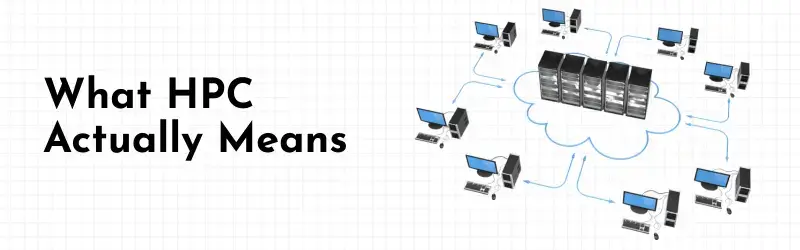
HPC is basically when one system is not enough. Instead of running everything on a single server, you split the workload across multiple machines and process things in parallel. So instead of one server taking 10 hours, multiple systems can finish it in a fraction of that time.
Today, High-Performance Computing is used across:
- AI model training
- Financial calculations
- Research simulations
- Large-scale data analysis
But honestly, even mid-sized businesses are now getting into HPC because data has become heavier and expectations are higher.
Why Bare Metal Makes a Difference
Let’s keep it simple, A VPS or cloud server is still running on shared hardware. Even if you’re allocated resources, there’s always a layer in between the hypervisor and other users on the same machine.
With Bare Metal Servers, there is no sharing and no abstraction layer. You get full access to physical hardware—CPU, RAM, storage—all dedicated to your workload.
That’s the main reason why, when someone moves from a virtual environment to bare metal, the first thing they notice is consistency.
A client starts with a VPS, upgrades to a bigger plan, then moves to cloud expecting better performance. It improves for a while, but once the workload grows, the same issue comes back – performance spikes and drops. That’s not because cloud is bad. It’s just not built for everything.
Even the best cloud hosting setups are designed for flexibility, not raw sustained performance.
HPC needs stability more than flexibility. And that’s where bare metal fits in.
What You Actually Gain with Bare Metal for HPC
1. Stable Performance
In HPC environments, consistency matters more than peak speed. Bare metal dedicated servers ensure that if a task takes 2 hours today, it takes nearly the same time tomorrow, without fluctuations caused by shared environments.
2. No Hidden Bottlenecks
Virtual environments can hide performance issues due to shared I/O or hypervisor limitations. With Bare Metal Servers for HPC, what you see is what you get, making troubleshooting much easier.
3. Better Use of Hardware
When you’re running directly on the hardware, your applications can fully utilize:
- CPU cores
- Memory bandwidth
- Disk speed
There’s no translation layer reducing efficiency. This becomes very noticeable in compute-heavy tasks.
4. Freedom to Configure Things Your Way
This is something people don’t think about initially. With bare metal, you can set things up exactly how your workload needs:
- Custom OS tuning
- RAID configurations
- GPU integration
- Network optimization
In virtual setups, you’re always working within some limits.
Real Use Cases
AI and Machine Learning
Training models is one of the most resource-heavy tasks right now. On virtual servers, training can slow down depending on load. HPC using Bare Metal Servers with proper GPU setup, the difference is obvious — faster training, fewer interruptions.
Financial Systems
Anything involving real-time calculations needs low latency. Even a small delay matters here. Bare metal dedicated servers helps because there’s no virtualization layer adding extra delay.
Rendering and Media Work
Rendering is one of those tasks where more power directly means less waiting. Bare metal servers reduce rendering time significantly, especially when combined with fast storage.
Data Processing
When datasets become large, I/O speed becomes critical. HPC using Bare Metal Servers ensures faster data access and smoother processing.

When Does HPC Actually Need Bare Metal?
Not every workload needs bare metal from day one, and that’s something a lot of people realize only after scaling. Most setups usually start with VPS or cloud because it’s quick and flexible. But as the workload grows, especially with tasks like data processing, AI training, or continuous simulations, performance starts becoming inconsistent. That’s usually the point where bare metal starts making more sense. It’s not about getting more power, it’s about getting reliable power. When jobs begin taking longer than expected or results vary from run to run, it often comes down to shared resources in virtual environments. Moving to Bare Metal Servers for HPC ensures consistency, where workloads behave the same way every time, which is exactly what HPC setups need to perform efficiently.
Conclusion:
HPC is not something only big companies need anymore. If your work involves heavy processing, large datasets, or time-sensitive tasks, you’re already in that space — whether you call it HPC or not. The main question is not whether you need more power.It’s whether your current setup is giving you consistent performance. If the answer is no, then moving to bare metal is worth considering.
With dedicated resources, predictable performance, and complete control, Bare Metal Servers for HPC provide the stability that modern workloads demand.